Let’s step into a time machine.
Where do you want to go?
1989?
Michael Keaton was Batman. Indiana Jones feared almost nothing—except maybe snakes. STEM was finding its way into Hollywood with Honey, I Shrunk the Kids.
Manufacturing employed nearly 19 million Americans. IBM was the technology giant everyone admired. There were no smartphones. No online banking. No streaming services. No cloud computing. No artificial intelligence.
Was life better?
Of course it felt better.
We were kids.
Fast forward to today.
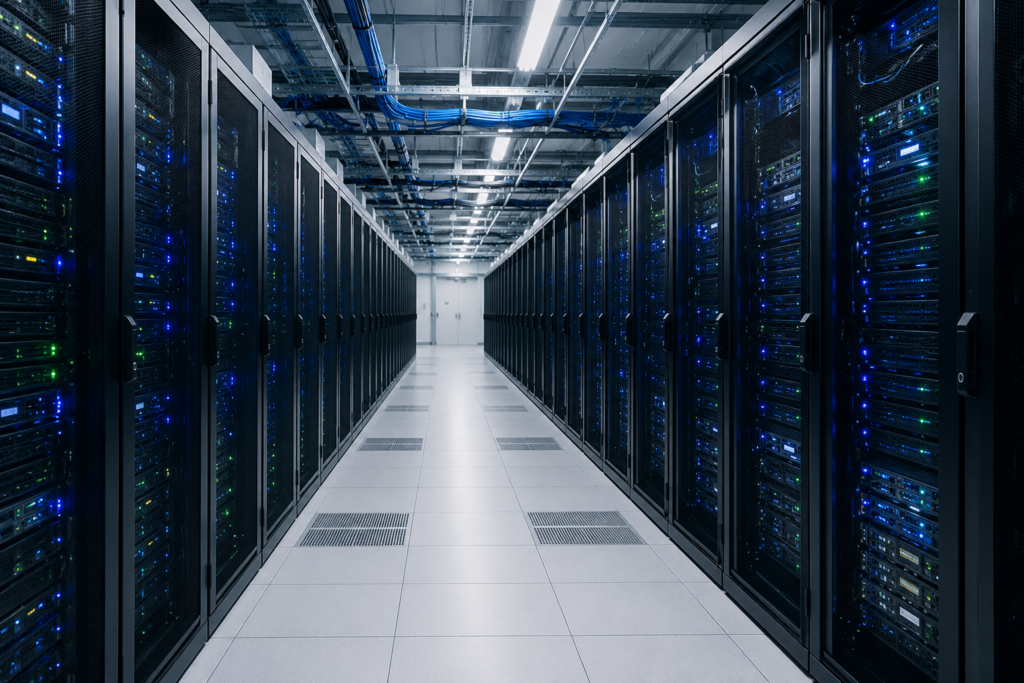
Thirty years later, the world had changed. Manufacturing employment had declined while millions of Americans were building careers in software, cloud computing, cybersecurity, and other technology-driven industries. Just as factories powered the economy in 1989, digital infrastructure—including data centers—has become essential to powering today’s economy.
Technology is at our fingertips. We can video chat with someone across the globe, deposit a check without visiting a bank, stream almost any movie ever made, and ask AI to help solve complex engineering problems in seconds.
Whether you believe technology has improved our lives or complicated them is a fair debate. But one thing isn’t debatable:
None of it works without data centers.
Every Google search, credit card transaction, telemedicine appointment, streamed movie, AI prompt, and cloud backup depends on them.
Lately, data centers have become the target of protests and criticism. The concerns are understandable. People worry about electricity demand, water consumption, noise, and how these facilities affect their communities.
Those concerns deserve thoughtful discussion.
But they also deserve context.
Nationally, data center water use represents a very small share of total U.S. water consumption, although communities with a high concentration of facilities can experience much greater local impacts. Electricity demand is growing because of AI and cloud computing, and in some regions where many facilities are concentrated, data centers can represent a significant share of local power use. Those are real engineering and planning challenges—not reasons to abandon the infrastructure that powers our digital economy.
Every generation builds the infrastructure it needs.
Our grandparents built highways.
Our parents expanded airports and telecommunications.
Today, we are building digital infrastructure.
A century ago, factories powered America’s economy.
Today, data powers it.
The factories that once built our economy have been joined by facilities that power it digitally.
Every online purchase, telemedicine appointment, financial transaction, video call, manufacturing system, and AI application depends on servers running inside data centers. When you ask an AI assistant a question, your phone isn’t doing the heavy lifting. Thousands of servers inside a data center are.
Data centers also create economic value beyond technology. They generate billions of dollars in investment, create thousands of construction jobs, support engineers, electricians, HVAC technicians, network specialists, and suppliers, and often encourage utilities to modernize the electrical grid.
Could we build them better? Absolutely.
We should continue investing in more efficient cooling systems, reclaimed water where practical, cleaner energy sources, smarter site selection, and modern electric infrastructure. Communities deserve transparency and responsible planning.
But rejecting data centers altogether would be like rejecting railroads during the Industrial Revolution or highways during the rise of the automobile.
Progress has always required infrastructure.
Data centers aren’t replacing America’s future. They’re helping build it.
For years, television told us to pee on a jellyfish sting. Today we know better because we followed the science, not the myth.
The same should apply to data centers.
Just because the loudest voices tell us we shouldn’t build them doesn’t mean they’re right. We should ask questions, examine the evidence, and make informed decisions—not simply because you saw it on an episode of Friends.
So before we say “no” to the infrastructure powering our digital future, ask yourself one question:
What will our world look like in 2049 without data centers?
No AI.
No cloud computing.
No instant access to information.
No innovations we haven’t even imagined yet.
Every generation inherits the future built by those who came before it.
The question isn’t whether we should build the future.
The question is whether we’ll have the courage to build it responsibly.
References
U.S. Department of Energy. DOE Releases New Report Evaluating Increase in Electricity Demand from Data Centers.